On this tour, you will visit two of the main centres for Inuit art in Canada's Arctic, Kinngait and Pangnirtung. You will also have a chance to meet several of the artists and engage with them as you learn about the inspirations for the tremendous art they create.
Inuit Art and Arctic Communities Exploration Tour
from $6,990.00 CAD Financing Available 9 Days Tour
Trip Highlights
- Angmarlik Visitor Centre, Pangnirtung to view the displays of Thule and modern Inuit
- Boat tour Pangnirtung to Auyuittuq National Park,
- Visit local artist Andrew Qappik and the tapestry's studio
- Explore ancient Dorset archeological sites at Mallikjuaq Territorial Park
- Kenojuak Cultural Centre and Print Shop, Kinngait for a printmaking demonstration
- Town tour of Iqaluit
Accommodation
The Auyuittuq Lodge
Auyuittuq Lodge Inns North is owned and operated by the Pangnirtung Co-op. Pangnirtung is located on a narrow coastal plain against a spectacular backdrop of high mountains and a winding river valley. Legend says a hunter named Atagooyuk gave the place its name well over 100 years ago. The 22 suite hotel features a lounge, dining room, and conference facilities.
Room Type: Standard Twin or Double
Dorset Suites
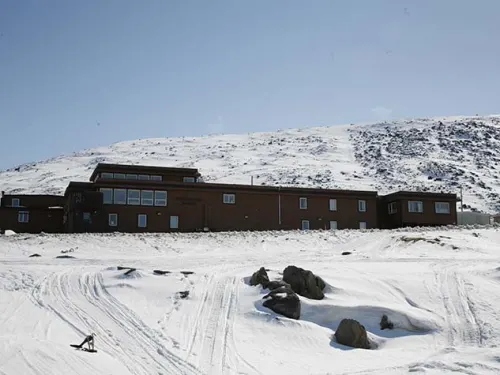
Our accommodations are all centrally located in the natural splendour of stunning Cape Dorset. They take their cue from the tradition and beauty of the land, and subtly transition from the breathtaking outdoor environment to our calming indoor world. In our original Dorset Suites building, the space is a soothing and contemporary architectural expression of the northern winter stone house concept – qammaq – long established by the Inuit. Our newest addition, the Dorset Suites Hotel, has a design based on the bird spirit and is inspired by our rich artistic community.
Room Type: Bayview Suites
Frobisher Inn
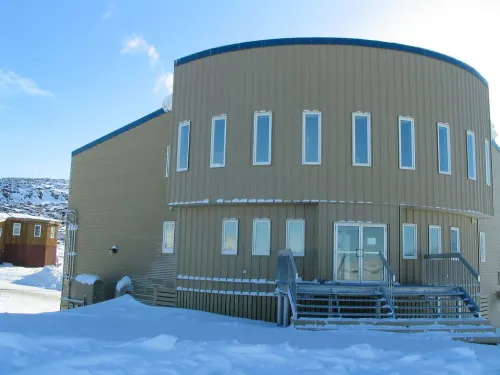
In our Northern Iqaluit hotel, gourmet dining meets rustic luxury, meets clean lines, and meets boundless hospitality. Welcome to our Northern paradise, where adventures meet.
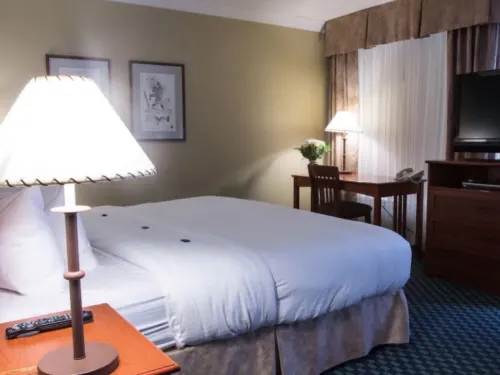
Room Type: Superior Room
Trip Details
Group size: Min. 10/Max. 14
Escorted by: Darlene Coward Wight - Curator of Inuit Art at the WAG Qaumajuq
This escorted tour may also be customized for small, private groups. If you are interested in this, or a similar itinerary, please ask us for a quote. Disclaimer: We do our utmost to ensure that information posted on our website is correct at the time of publication, however trip details are subject to change without notice by the suppliers and operators involved. We update the information as soon as possible when changes are advised to us, however, we cannot assume responsibility for such changes made by the suppliers and operators.
Meet your Tour Escort
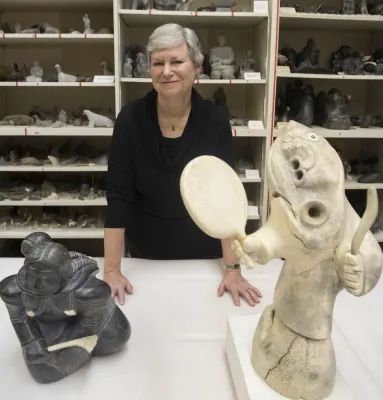
This tour will be escorted by Dr. Darlene Coward Wight, who has been the Curator of Inuit Art at the WAG since 1986. Darlene has received a BA (Hons) in Art History and an MA in Canadian Studies from Carleton University and an honorary Doctor of Letters from the University of Manitoba in 2012. She has curated over 90 exhibitions and written 26 exhibition catalogues, as well as many smaller publications and articles. She is also the editor and major contributor for the book Creation & Transformation: Defining Moments in Inuit Art.
Itinerary
Welcome to Ottawa. Upon arrival, you are confirmed for a one night stay at the Hilton Garden Inn Ottawa Airport. Located just one kilometer from the Airport, the hotel offers a 24 hour shuttle for pickup and drop off services.
Check in at least 90 minutes prior to your early morning flight north to Pangnirtung, with a short stop in the capital of Nunavut, Iqaluit.
Upon arrival, you will be picked up by the Auyuittuq Lodge for a 3-night stay with all meals included.
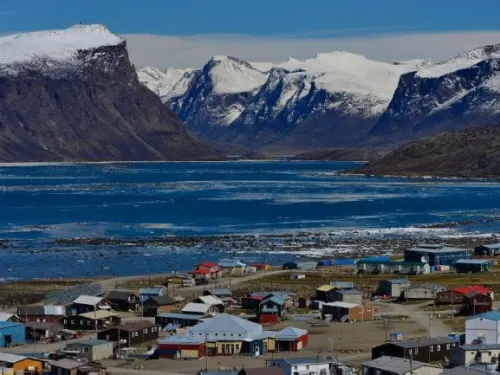
The Hamlet of Pangnirtung is located 236 km Northeast of Iqaluit, on Baffin Island. The name is derived from “the place of many bull caribou.” Pang, as it is known, has gained an international reputation for producing high-quality sculptures, prints, and tapestries.
Accommodation: The Auyuittuq Lodge - Standard Twin or Double
Meals: D
Boat Excursion to Auyuittuq National Park with Peter Kilabuk
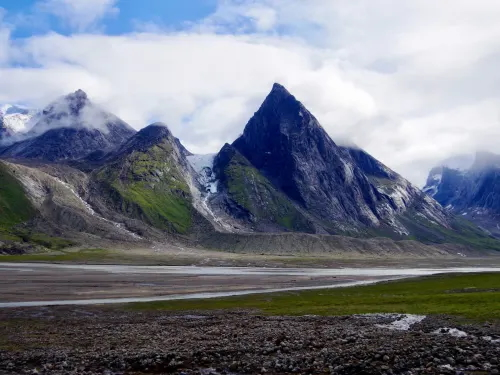
Today you will enjoy a boating excursion from Pangnirtung to Auyuittuq National Park, approximately 30km (1 hour). Auyuittuq is a diverse and grand-scale Arctic experience. Please meet your guide, Peter Kilabuk at the floating docs at 9:45am. This will be about a 10 minute walk from your hotel, past the Parks and Hamlet office.
Tour departure will be at approximately 10am, as high tide is around 12:55pm. After our travel to the end of the fjord, you will enjoy some time ashore with stories from Peter. Next you will view the zig-zagged waterfalls on the west side of the fjord. We will visit a Heritage Canada location, and an old HBC cabin where locals go trapping for fox.
The group will have an opportunity to hike in the immediate area and take some pictures. We will then travel to the other side of the fjord to see Mt. Odin, the highest peak in all of Baffin Island, visible from the boat. En route back to Pangnirtung, stopping by where the seagulls nest each year. (Duration approximately 5hrs, includes bagged lunch from the hotel)
Tour: Boat Excursion to Auyuittuq National Park with Peter Kilabuk (x 2)
Accommodation: The Auyuittuq Lodge - Standard Twin or Double
Meals: B, L, D
Artist Experience with Andrew Qappik
Today you will enjoy an experience with local artist Andrew Qappik and the Uqqurmiut Tapestry Studio.
Andrew Qappik CM (born February 25, 1964, in Nunataq, Nunavut) is a Canadian Inuit graphic artist currently residing in Pangnirtung, Nunavut. Qappik is known for his printmaking. His prints depict both animals and traditional Inuit culture, which he has learned about from his own experience and stories from his grandfathers and other relatives. Some of these relatives have been an influence on Qappik's artistic sensibilities. He has a fondness for realistic & naturalistic scenes of Arctic life; an instinctive grasp of line, form, and composition; and use of lighter colored tones with little negative space. Qappik's works are published by the Pangnirtung Print Shop, under the auspices of the Uqqurmiut Centre for Arts & Crafts. He was made a Member of the Order of Canada in 2017 for his artistic contributions as well as the design of the Nunavut Flag and Coat of Arms.
Angmarilik Visitor Centre
Spend the remainder of your day exploring the community with a visit to Angmarlik Visitor Centre to view the displays of Thule and modern Inuit, along with the local library and elder’s drop-in center on-site.
The Thule were the ancestors of all modern Inuit. They developed in coastal Alaska by 1,000BC and expanded eastwards across Canada, reaching Greenland by the 13th century. In the process, they replaced people of the earlier Dorset culture that had previously inhabited the region. The appellation "Thule" originates from the location of Thule (relocated and renamed Qaanaaq in 1953) in northwest Greenland, facing Canada, where the archaeological remains of the people were first found at Comer's Midden.
The links between the Thule and the Inuit are biological, cultural, and linguistic. Evidence supports the idea that the Thule (and also, to a lesser degree, the Dorset) were in contact with the Vikings, who had reached the shores of Canada in the 11th century.
Intensified contacts with Europeans began in the 18th century. Compounded by the already disruptive effects of the "Little Ice Age" (1650–1850), the Thule communities broke apart, and the people were henceforward known as the Eskimo, and later, Inuit.
Enjoy dinner back at the lodge.
*One of these activities may be moved to Day 3.
Tour: Artist Experience with Andrew Qappik
Tour: Angmarilik Visitor Centre
Accommodation: The Auyuittuq Lodge - Standard Twin or Double
Meals: B, L, D
Welcome Dinner
Arrive in Kinngait and settle into your accommodations at the Dorset Suites. The afternoon will include some free time to walk around and explore. Enjoy a welcome dinner at the Dorset Suites with your hosts, along with a Throat Singing Demonstration to follow.
Dinner at approximately 6:00pm
Arts Impact on Kinngait
Cape Dorset was named after Edward Sackville, the 4th Earl of Dorset. It is located on Dorset Island, a short distance from the southwest coast of Baffin Island. The Hudson's Bay Company established a trading post there in 1913, where they traded furs for supplies such as rifles, ammunition, flour, tea and sugar. The community was incorporated as a hamlet in 1982 and is now widely-known by its Inuktitut name, Kinngait.
Kinngait has come to be described as the most artistic community in Canada, with some 22% of the labour force employed in the arts. Since 1957, Kinngait Studios has published an annual print collection that is marketed internationally.
Well-known Kinngait graphic artists are Kenojuak Ashevak, Pudlo Pudlat, Parr, Pitaloosie Saila, Annie Pootoogook, Shuvinai Ashoona, Kananginak Pootoogook, and Ningiukulu Teevee.
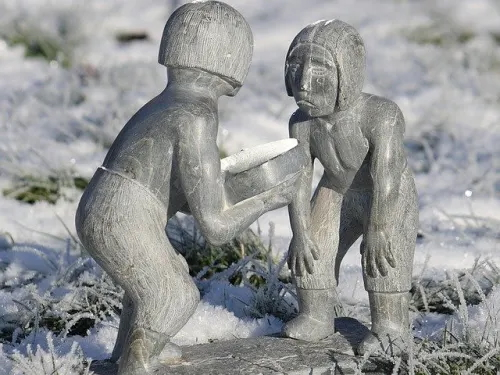
Sculptors who are known world-wide are Nuna Parr, Kiugak Ashoona, Osuitok Ipeelee, Pauta Saila, and Toonoo Sharky.
Transportation: Fly to Kinngait
Activity: Welcome Dinner
Accommodation: Dorset Suites - Bayview Suites
Meals: B, L, D
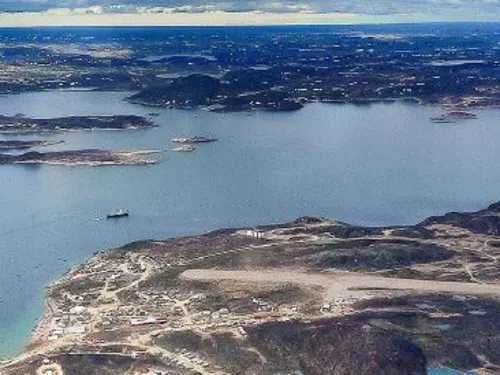
Explore Mallikjuaq Island
Enjoy breakfast at your hotel before making a short boat journey to Mallikjuaq Island. Mallikjuaq means 'big wave' in Inuktitut, an appropriate name for an island where rounded rock hills and low tundra valleys resemble giant rolling waves. Spend time hiking the island walking the island hiking trail and view the thule houses and former cultures tent rings. Learn about the Arctic flora and traditional uses and environment adaptations.
After lunch at the Dorset Suites, the group will head out on an afternoon Community Tour. Visit with the local artists, and view the soap stone and sculpture demonstrations.
You will be joined by a local Elder and interpreter during your dinner at the Dorset Suites.
Tour: Explore Mallikjuaq Island
Accommodation: Dorset Suites - Bayview Suites
Meals: B, L, D
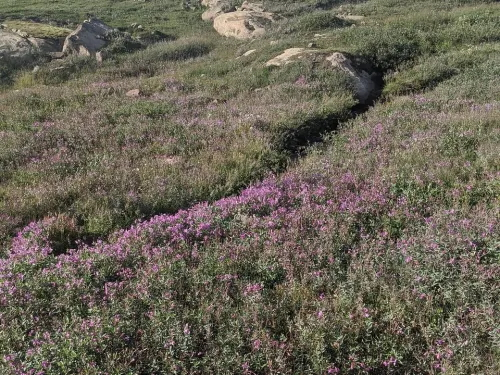
Print Demonstration and Experience
After breakfast, we ask that you check out of your hotel rooms. The group will tour the West Baffin Eskimo Co-operative Print Studio. The Kenojuak Centre is where Cape Dorset artists create their incredible art. Over the past half-century, the bold and imaginative prints of the Cape Dorset Inuit have become recognized as some of the finest art in the world. Spend time with the local artists and enjoy a print demonstration.
Lunch will be included at the Dorset Suites, before being transferred to the airport for your flight to Iqaluit.
Free Time to Explore Iqaluit
Upon arrival in Iqaluit, enjoy some free time to explore the wonderful sites of the territorial capital.
Tonight you can enjoy dinner at your leisure at one of the local restaurants.
Iqaluit, meaning "place of fish", is the capital of the Canadian territory of Nunavut, its largest community, and its only city. It was known as Frobisher Bay from 1942 to 1987, after the large bay on the coast of which the city is situated, before the traditional Inuktitut name was restored. Iqaluit became the capital of Nunavut after the division of the Northwest Territories into two separate territories in 1999.
Before this event, Iqaluit was a small city and not well known outside the Canadian Arctic or Canada, with population and economic growth highly limited. This is due to the city's isolation and heavy dependence on expensively imported supplies, as the city, like the rest of Nunavut, has no road, rail, or even ship connections for part of the year to the rest of Canada.
The city has a polar climate, influenced by the cold deep waters of the Labrador Current just off Baffin Island; this makes the city of Iqaluit cold, although the city is well south of the Arctic Circle. As of the 2016 census, the population was 7,740 (Population Centre: 7,082), an increase of 15.5 percent from the 2011 census. Iqaluit has the lowest population of any capital city in Canada. Inhabitants of Iqaluit are called Iqalummiut.
Activity: Print Demonstration and Experience
Transportation: Fly to Iqaluit
Tour: Free Time to Explore Iqaluit
Accommodation: Frobisher Inn - Superior Room
Meals: B, L
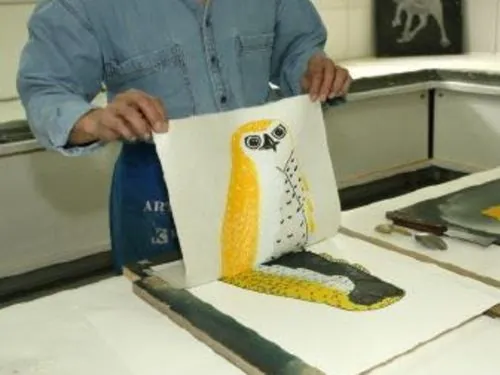
Iqaluit City Tour
After enjoying a leisurely morning walk around Iqaluit, you will then be picked up from the Frobisher at approximately 2pm. From here you will enjoy a 2 Hour Iqaluit Community Tour, including a location which will provide an amazing view over the entire bay and community of Iqaluit. After exploring places of interest within Iqaluit, we will head to Silvia Grinnell Territorial Park.
Traditional Cook Out
A traditional meal cook out along with activities with the Elders will be included at the Park, prior to returning to your accommodation.
Tour: Iqaluit City Tour
Dining: Traditional Cook Out
Accommodation: Frobisher Inn - Superior Room
Meals: D
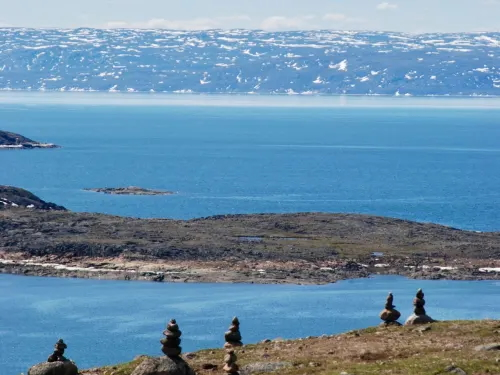
Today, you will check out of your accommodation and transfer back to Iqaluit Airport. Please check in at least 90 minutes prior to your departure with your valid identification.
Our flight back to Ottawa will arrive mid-afternoon, allowing a connection to late afternoon and evening flights. If you are unable to fly back to your home city today we can add on another night in Ottawa, pricing on request.
Transportation: Fly to Ottawa
Are you ready?